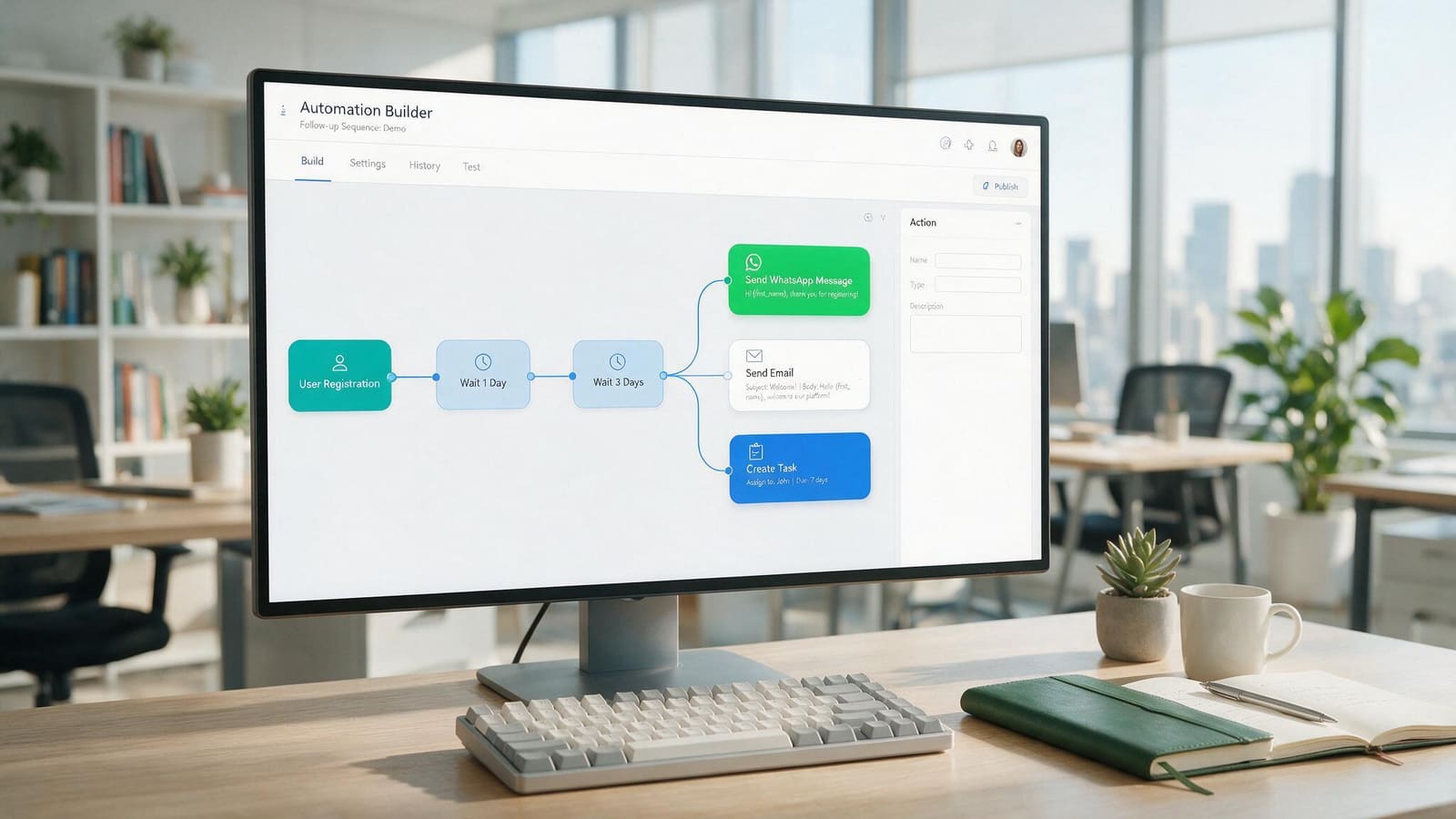
Businesses ask us for lead generation and mean, quite often, that they want more first contacts. Then you look at what happens to the first contacts they already have, and most of them received exactly one reply and nothing afterwards.
One client described the shape of what he wanted, and it is worth quoting because it contains the whole thing:
Ads, a CRM, and follow-up. He listed them in the order they get bought and the reverse of the order they pay off. The ads are the expensive part, the CRM is the visible part, and the follow-up is the part that decides whether either was worth it.
Why the second contact does not happen
Not laziness. Three structural reasons, all fixable:
- Nobody owns it. The first reply has an obvious owner — whoever was on the enquiry. The fourth has none, so it belongs to nobody and does not happen.
- There is no trigger. A first reply is triggered by an arriving enquiry. A second reply is triggered by nothing at all unless something is built to trigger it.
- It feels like pestering. This is the honest one, and it is why the content of the sequence matters more than its timing.
What a lead nurturing sequence should actually contain
A follow-up sequence is not a newsletter with a shorter gap. It is a small number of specific messages, each of which would be reasonable to send by hand, tied to what that person asked about.
| Contact | Timing | What it is |
|---|---|---|
| 1 | Within minutes | Acknowledge, ask one clarifying question, say when the answer comes |
| 2 | Same or next day | The actual answer, with a specific next step |
| 3 | Three to four days | One useful thing related to their question, not a chase |
| 4 | Ten days | A direct, short question: is this still live, or shall I close it? |
| 5 | Six to eight weeks | A single check-in, then stop |
Contact three is the one people get wrong. "Just following up" is a message about your pipeline, not their problem, and everybody recognises it. Send something they can use — the relevant example, the price range they were circling, the answer to the question they did not know to ask.
Contact four is the one people are afraid of and it consistently performs best. Asking plainly whether something is still live gives the person permission to say no, and a surprising share instead say yes and re-engage.
Lead follow up automation: what to automate, what to leave alone
The split matters, because automating the wrong half is what makes follow-up feel like spam.
| Automate | Keep human |
|---|---|
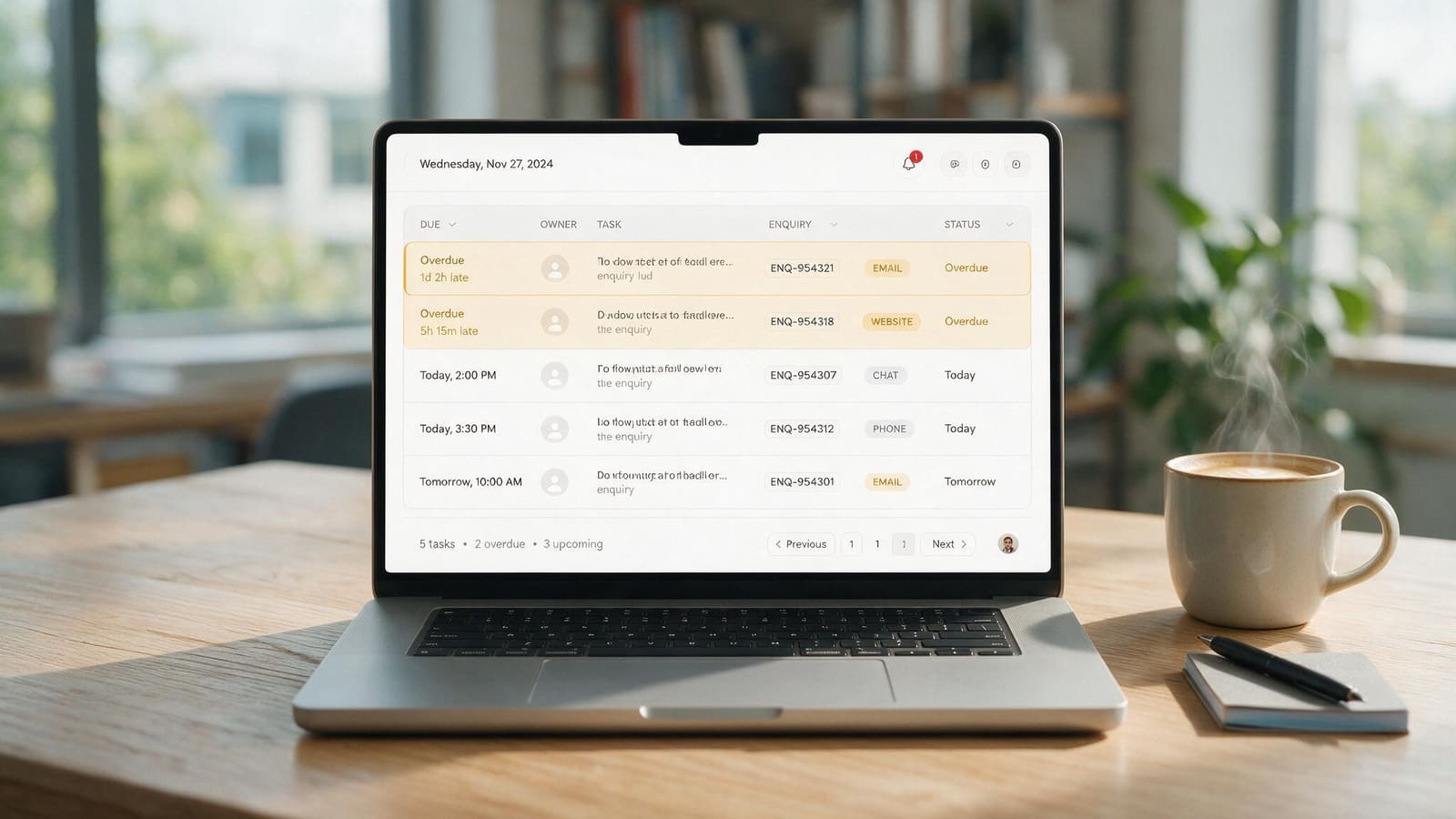
| The reminder that a contact is due | The wording of the message |
| Assigning an owner to each contact | Anything that references their specific situation |
| Stopping the sequence when they reply | The decision to keep going past contact four |
| Logging what was sent and when | The judgement call on price or scope |
A system that reminds a named person to send contact three, with the enquiry's details in front of them, outperforms a system that sends contact three automatically. It costs a minute of somebody's time and it does not read like a template, because it is not one.
Lead scoring helps, but the exit condition is not optional
Every sequence needs a defined way to stop: they reply, they book, they unsubscribe, or it reaches the end. A sequence that continues after somebody has answered is worse than no sequence, because it demonstrates that nobody is reading.
This is the most common failure we are called in to fix, and it is almost always the same cause: the sequence lives in an email tool that never learns about replies arriving in a different inbox, or on WhatsApp, or by phone. If the follow-up system and the conversation system are not the same system, somebody will get chased for a decision they already made.
What to measure
Not messages sent, which goes up whether or not it is working. Measure contacts per enquiry — the average number of times a real person made contact before the enquiry closed one way or the other.
Most businesses that have never built this sit near one. Getting the average to three, without buying a single extra lead, is usually the cheapest revenue available to them.
Common questions
Four or five contacts over roughly two months, then stop. Most businesses that have never built a sequence average about one, which means the deals available in contacts two through five are simply not being collected. Getting the average to three usually produces more revenue than buying additional leads.
Something the person can use, tied to what they asked about — the relevant example, the price range they were circling, the answer to a question they did not know to ask. "Just following up" is a message about your pipeline rather than their problem, and everyone recognises it as such.
No. Automate the reminder, the ownership assignment, the stop condition and the logging. Keep the wording human. A system that reminds a named person to send the message, with the enquiry in front of them, outperforms one that sends it automatically, because it does not read like a template.
Almost always because they keep running after the person has already replied. That happens when the sequence lives in an email tool that never learns about a reply arriving on WhatsApp or by phone. If the follow-up system and the conversation system are separate, somebody will be chased for a decision they already made.
Contacts per enquiry: how many times a real person made contact before the enquiry closed either way. Messages sent rises whether or not the system is working, so it tells you nothing.