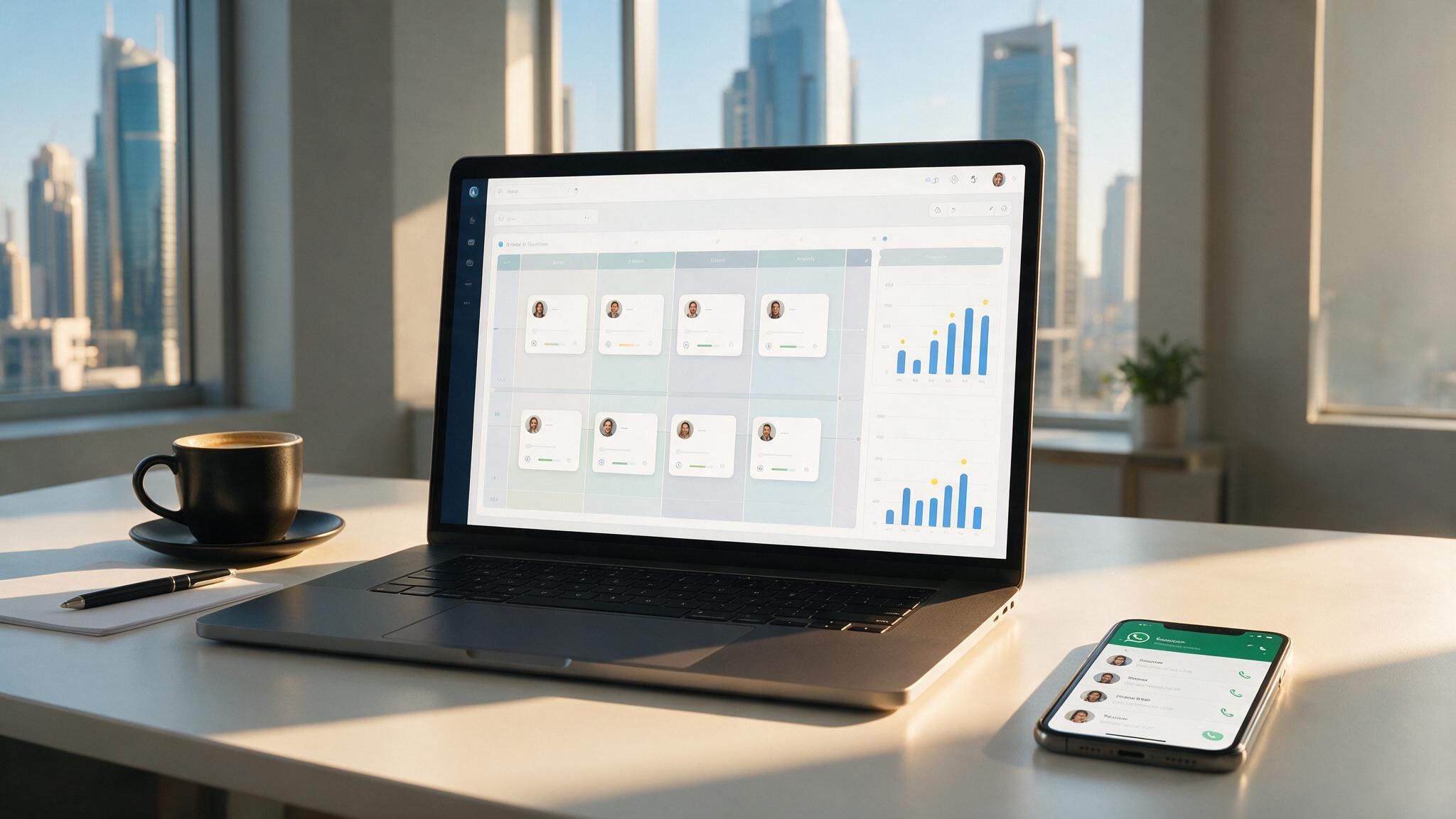
Most Dubai businesses do not have a CRM problem. They have a CRM they paid for and stopped using. The trial went well, the team logged leads for three weeks, and then a busy month happened and everyone went back to WhatsApp chats, a shared spreadsheet, and whoever remembered to follow up. The licence is still being paid for. Nobody opens it.
We see this pattern constantly: sales teams tracking calls in a basic spreadsheet because the CRM felt like extra admin, studios chasing leads across social DMs and forms with no system connecting them, businesses hiring a virtual assistant specifically to manually patch together what a CRM should have automated from day one. The tool is rarely the problem. What is missing is the system around it that makes using it easier than not using it.
Why CRM management fails before it starts

A CRM is not software you install and walk away from. It is a live system that needs to be configured around how your team actually works, then wired into every channel a lead can arrive from. Skip that step and you get exactly what we keep finding in discovery calls.
- Leads enter through five channels and land in zero systems. WhatsApp, Instagram DMs, a contact form, a cold-call list, a referral. None of them write to the CRM automatically, so someone has to remember to type it in, and on a busy day nobody does.
- No scoring, so hot leads sit next to cold ones. A prospect ready to buy this week gets the same priority as someone who filled out a form six months ago out of curiosity.
- Follow-up depends on memory, not the system. A lead replies once, the rep gets pulled into something else, and the deal goes cold, not because it was unwinnable but because nothing nudged anyone to follow up.
- The CRM was configured generically, not around the business's actual sales stages, so reps find it slower than their old spreadsheet and quietly stop using it.
None of this is a training problem. It is a setup problem, and it is exactly what CRM management means when it is done properly: not "buy the software," but build the system that makes the software the fastest way to get work done, not the slowest.
The three layers we implement
We build CRM systems around three layers, and we do not consider a CRM live until all three are working together.
| Layer | What it does |
|---|---|
| CRM as single source of truth | Zoho or HubSpot, configured around your real sales stages, not a generic template. Every contact tagged with source, stage and intent. |
| Every channel wired in | WhatsApp, web forms, ad platforms and cold-call lists feed the CRM directly through integration, not manual entry. |
| Automated scoring and follow-up | Leads scored on arrival by the signals that predict a close. Anything that goes quiet for a set number of days triggers a nudge instead of dying silently. |
What most rollouts skip
| What most CRM rollouts do | What we build instead |
|---|---|
| Install the software, hand over a login | Configure pipelines around your actual sales process before go-live |
| Leave lead capture manual across channels | Wire WhatsApp, forms and ad platforms directly into the CRM |
| No lead scoring, reps work the list blind | Automated scoring so hot leads get worked first |
| Follow-up depends on a rep remembering | Automated nudges trigger when a lead goes quiet |
| One-time handover, no support after | Ongoing monitoring so workflows keep running as connected tools change |
Our process
- 1Discovery: map every channel leads currently arrive through and where they get lost today.
- 2Pipeline design: CRM stages built around your actual sales process, not a generic template.
- 3Integration: WhatsApp, forms, ad platforms and existing tools connected directly to the CRM.
- 4Scoring and automation: lead scoring and follow-up sequences configured and tested against real scenarios.
- 5Go-live and training: team onboarded on the live system, with documentation handed over.
- 6Monitoring: we keep watching after launch, since integrations break when a connected tool changes its API, not because a team did anything wrong.
Most teams go live in 2 to 4 weeks, depending on how many channels need connecting and how quickly we get access to existing tools and data.
Who this is for
- Sales teams tracking leads in spreadsheets or WhatsApp because the CRM they bought felt like extra work instead of less work.
- Agencies and studios chasing leads across social DMs and forms with no single place showing the full pipeline.
- Businesses with a CRM licence already paid for and barely used, often the fastest fix since the software is already there.
- Teams hiring virtual assistants to manually patch together what automation should be doing.
Common questions
Almost always because leads still arrive through channels the CRM was never connected to, so keeping it updated means manual double entry. Once that friction exists, a busy week is enough for a team to revert to WhatsApp and spreadsheets.
Usually not. An existing licence sitting unused is often the fastest fix available, since the software cost is already sunk. The work is wiring channels into it and configuring pipelines around your actual process, not replacing the platform.
Most teams go live in 2 to 4 weeks. Timeline depends on how many channels need connecting (WhatsApp, ad platforms, forms) and how quickly you can give access to existing tools and data.
Implementation is getting the software live. Management is the ongoing layer, lead scoring, automated follow-up, monitoring integrations, that keeps a team actually using it three months later instead of drifting back to spreadsheets.